
Introduction: The Great Brazilian Structural Analysis Showdown
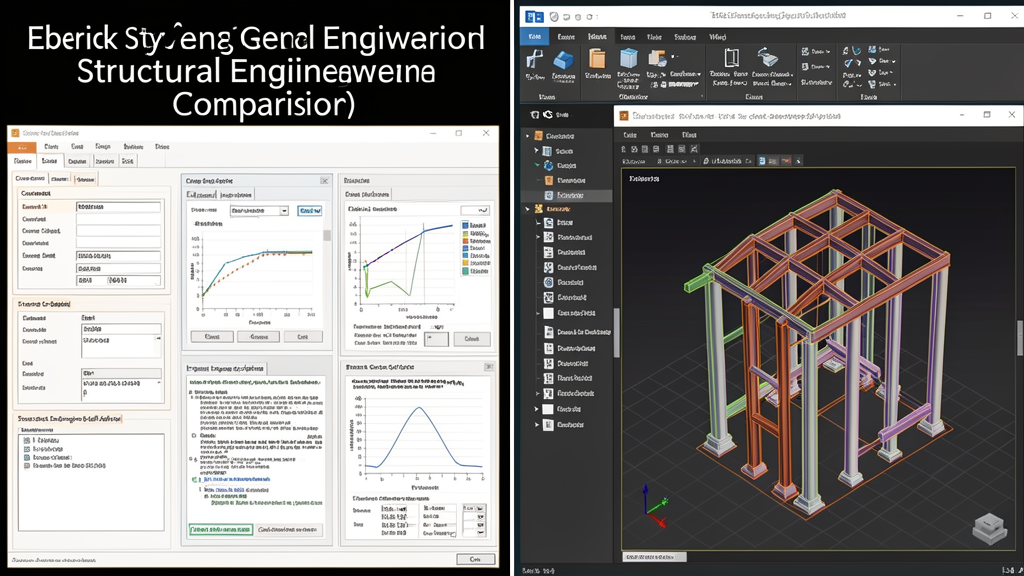
If you are a civil engineer or an engineering student in Brazil, you have probably faced the dilemma: Eberick or TQS? Both are the most widely used structural analysis software in the country, each with its own legion of fans, its advantages, and its limitations. In 2026, with the new updates on both sides, the choice has become even harder — and even more important.
In this complete comparison, we will take a deep look at every aspect of these two tools: from the history of each one to cost, covering ease of use, 3D visualization, advanced analysis, soil-structure interaction (SISE), integration with other software, and the size of the community in Brazil. By the end, you will have all the information you need to decide which software makes the most sense for your firm or project.
The History of Each Software
AltoQi Eberick
Eberick was born in 1993, developed by AltoQi, a Brazilian company headquartered in Florianópolis (SC). The name Eberick is a tribute to the German engineer Eberick, who developed calculation methods for ribbed slabs — a reference that has conveyed the software's purpose from the very beginning: to make the everyday work of the Brazilian structural engineer easier.
Over more than 30 years, Eberick has gone through several transformations. It started as a DOS tool, migrated to Windows, gained a graphical interface and CAD integration, and today it is one of the pillars of the so-called national BIM (Building Information Modeling). The 2026 version brought significant improvements to the non-linear analysis engine and to the integration with AltoQi Builder for coordination with architectural projects.
TQS Estrutural
TQS (Tecnologia em Qualidade de Software) was launched in 1989 by TQS Engenharia, also a Brazilian company, founded by the engineer Carlos Alberto de Maria. It was born before Eberick, and this is reflected in its more veteran user base and in a development philosophy that prioritizes technical rigor and customization.
TQS has always been known for offering granular control over every design parameter. While other software tries to automate everything, TQS gives the engineer the ability to intervene at every stage. In 2026, TQS continues to evolve with TQS 22, which brought advances in cloud processing and in integration with Revit via BIM.
Licensing Model
One of the factors that weighs most heavily in the choice between Eberick and TQS is the licensing model. Both have evolved in recent years to adapt to the subscription market, but the approaches are different.
Eberick adopted the annual subscription (SaaS) model, with plans ranging from basic (reinforced concrete only) to complete (concrete, steel, timber, structural masonry). You can purchase individual modules or complete packages. The license is tied to the engineer's CPF/CNPJ and can be used on up to two computers simultaneously. In 2026, AltoQi also began offering quarterly plans for seasonal firms.
TQS kept the perpetual license with annual maintenance model for many years, but in 2024 it began transitioning to a hybrid model. Today TQS offers both the perpetual license (with a high upfront cost + annual maintenance of ~25% of the value) and a pure subscription. The perpetual license still appeals to traditional firms that prefer a long-term investment without paying from scratch every year.
Ease of Use
This is perhaps the point of greatest disagreement among users. Eberick is widely considered the most intuitive and easy to learn. Its interface follows the Windows ribbon standard, elements are entered visually and directly onto the floor, and the learning curve is significantly shorter — a recent graduate can complete a simple project after just a few weeks of practice.
TQS, on the other hand, has a steeper learning curve. Its interface is more technical, the menus are deep and packed with options, and the engineer needs to understand advanced structural analysis concepts to take full advantage of its potential. However, those who master TQS tend to have far greater control over the project. Many say: "Eberick is easier to start with, but TQS is harder to give up."
In terms of documentation and learning material, Eberick has the advantage: AltoQi maintains a training portal with free courses, weekly webinars, and a robust knowledge base. TQS also has quality material, but it is leaner and geared toward already experienced users.
3D Visualization
In 2026, both software packages have evolved significantly in the quality of three-dimensional visualization.
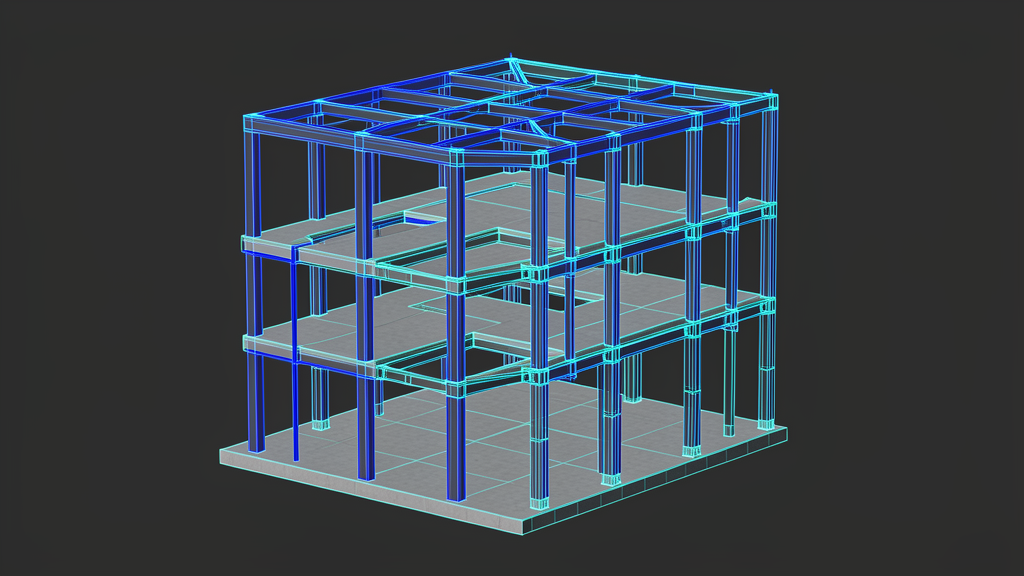
Eberick 2026 features an OpenGL-based 3D viewer that allows smooth navigation, the application of real concrete and steel textures, dynamic section cuts, and the export of images and videos for client presentations. Navigation is smooth even in models with more than 50 floors, and the software lets you view columns, beams, slabs, and foundations separately.
TQS 22 also has a capable 3D viewer, with a highlight on internal force rendering — you can view bending moment, shear, and deformation maps directly on the 3D model with a color gradient. Navigation is not as smooth as in Eberick on modest machines, but the wealth of technical information in the viewer is superior.
Advanced Analysis
When it comes to processing power and algorithm robustness, both software packages are at high levels, but with different philosophies.
Eberick has used cloud processing since 2022, which allows very large projects to be processed without overloading the local machine. P-Delta analysis (second-order effects) and physical and geometric non-linear analysis are available in the advanced module. In 2025, AltoQi incorporated finite element processing for slabs and reservoirs, something that used to be a weak point of the software.
TQS has always been a benchmark in advanced analysis. The TQS processor is one of the most robust structural analysis engines on the Brazilian market, with native support for shell finite elements (for slabs, deep beams, and reservoirs) and complete dynamic analysis (wind and seismic action). In 2026, the major new feature was the implementation of AI-assisted topology optimization for concrete sections, something Eberick does not yet offer natively.
Soil-Structure Interaction (SISE)
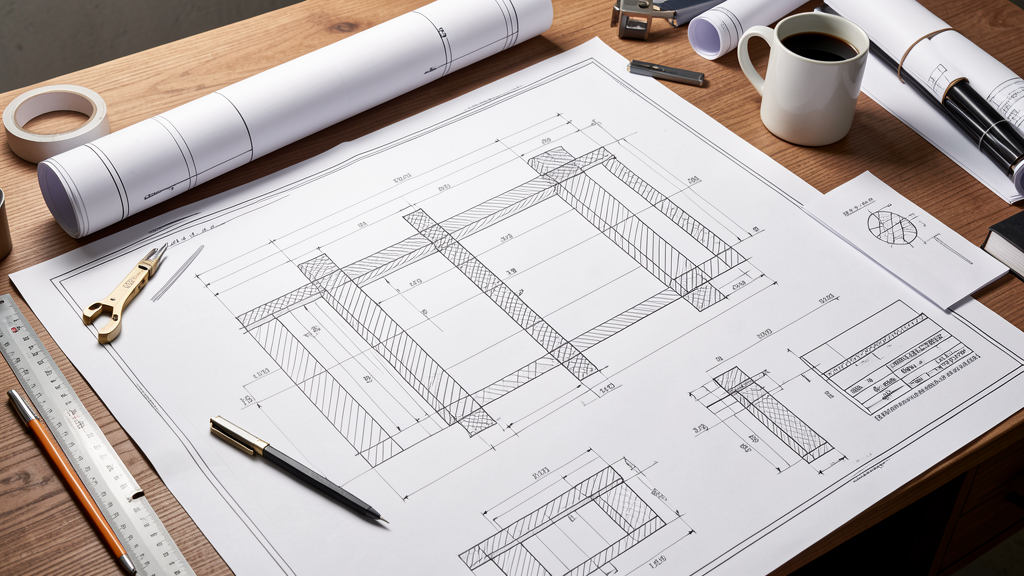
SISE (Soil-Structure) is an essential feature for real projects, where the soil interacts with the structure and influences the applied loads. No foundation design can ignore this effect.
Eberick offers Eberick Fundações, which designs pile caps, piles, and footings while accounting for soil-structure interaction. The module allows you to enter piles and grade beams with differential settlement analysis. In 2026, the integration with AltoQi Solos (launched in 2024) significantly improved settlement accuracy, allowing you to import SPT borings and generate the geotechnical profile automatically.
TQS has a historical advantage in SISE. SISE-TQS is a complete module that models the soil as an elastic or elastoplastic medium, with different subgrade reaction coefficients per layer. The analysis considers grade beams, raft foundations, piles, and footings simultaneously in an integrated model. The evaluation of differential settlements is more refined than in Eberick, and TQS allows you to export detailed geotechnical reports. In 2026, TQS Engenharia launched integration with the GEO5 software for more accurate bearing capacity analysis.
Integration with Other Software
In a modern firm, structural software does not work in isolation. The ability to integrate with other tools is fundamental.
Eberick stands out for its native integration with the AltoQi ecosystem (QiBuilder, AltoQi Elétrico, AltoQi Hidráulico, AltoQi Solar). For those who use AltoQi's complete suite, coordination between projects is automatic. In addition, Eberick exports and imports in the IFC and DXF/DWG formats, and has integration with Revit via plugin. The downside: the integration with Revit is still not fully bidirectional in all versions.
TQS has always been more focused on integration with AutoCAD and Revit. The TQS for Revit plugin is mature and allows a bidirectional workflow (changes in Revit are reflected in TQS and vice versa). TQS also exports to ETABS and SAP2000 (CSI), which is a differentiator for projects that require cross-checking with international software. In 2025, TQS began natively supporting the BIM Collaboration Format (BCF) for coordination with tools such as Solibri and Navisworks.
Size of the Community in Brazil
Eberick leads in the number of users in Brazil. AltoQi estimates more than 50,000 active engineer users, with a strong presence in small and medium-sized firms. The WhatsApp, Telegram, and Facebook groups dedicated to Eberick are extremely active, with thousands of members and hundreds of posts per day. Forums such as the AltoQi Forum and EngenhariaBIM have sections exclusively for Eberick with tens of thousands of threads.
TQS has a smaller user base, estimated at between 15,000 and 20,000 active engineers, but it is stronger in large firms and in complex projects (buildings over 30 floors, special structures). The TQS community is more technical and experienced, with high-level discussions about advanced modeling, seismic analysis, and structural optimization. The TQS Group on LinkedIn is a reference for in-depth technical debates, and Canal VIP maintains regular content about the software for the community.
Cost
The table below summarizes the main costs of each software in 2026:
Approximate values for 2026, based on quotes from January 2026. Check the official websites for updated prices.
In general, Eberick is cheaper on the annual subscription, while TQS offers more flexibility with the perpetual license. For a small firm starting from scratch, Eberick comes out more affordable. For a large firm that intends to use the software for many years, the TQS perpetual license may be more advantageous in the long run.
Head-to-Head Comparison: Eberick vs. TQS
FAQ — Frequently Asked Questions
Which software is best for starting a career?
Eberick, without a doubt. Its intuitive interface, abundant learning material, and active community make learning much faster. After mastering Eberick, moving to TQS is a natural transition for more complex projects.
Is TQS really more accurate than Eberick?
In terms of algorithm accuracy, both achieve reliable results within the current NBR standards (NBR 6118, NBR 6120, NBR 8800). The difference lies in the level of detail: TQS offers more fine-tuning options and analysis parameters, while Eberick makes more decisions automatically. For 95% of projects, the difference is irrelevant.
Can I use Eberick and TQS together in the same firm?
Yes, it is perfectly possible and many firms do it. You use Eberick for simpler and quicker projects (houses, townhouses, buildings up to 10 floors), and TQS for special or highly complex projects (towers, hospitals, structures requiring dynamic analysis). Interoperability can be handled via IFC or DXF/DWG.
Which one has better technical support?
Eberick has the advantage in user support. AltoQi has an online ticketing system with responses within 24 business hours, in addition to live chat during business hours and an extensive knowledge base. TQS also has competent support, but the response time tends to be longer and the service is more technical.
Does the software run on Mac?
Neither one has a native version for macOS. Both are compatible only with Windows. Mac users need to resort to virtual machines (Parallels, VMware) or Boot Camp to use either of the two software packages.
Is it worth subscribing to both?
It depends on your size. For firms that handle varied projects, having both can be a competitive differentiator, but the combined cost (about R$ 22,000/year for the complete subscription of both) is high. In that case, we recommend assessing the volume of each type of project in your firm before deciding.
Which one processes faster?
In comparative tests from 2025–2026, Eberick with cloud processing is significantly faster on large projects (above 30 floors) because it offloads processing to dedicated servers. TQS depends on the local machine, but its engine is more efficient on projects of up to 15 floors, where the overhead of communicating with Eberick's cloud does not pay off.
Is there a trial or student version?
Eberick offers a complete 30-day free trial, with no feature restrictions. There is also a student plan with a 50% discount upon proof of enrollment. TQS offers a 15-day trial for the basic module only, and has no official student plan — some universities have specific agreements.
Conclusion: Which One to Choose in 2026?
There is no single answer for all cases. The choice between Eberick and TQS depends on your professional profile, the type of project you carry out, and your budget.
Choose Eberick if:
- You are getting started in structural analysis
- Your firm works with medium-sized projects (up to 20 floors)
- You value ease of use and fast support
- Budget is a deciding factor
- You want cloud processing without worrying about hardware
Choose TQS if:
- You already have experience in structural analysis
- Your projects involve towers, hospitals, or special structures
- You need granular control over every parameter
- You prefer a perpetual license and a long-term investment
- Direct integration with Revit/ETABS is essential
In 2026, both software packages offer mature and reliable tools. The battle between Eberick and TQS has no absolute winner — what exists is the right tool for the right professional. What matters is knowing the capabilities of each one well and aligning your choice with the real needs of your firm. And remember: the best software is the one you master and that meets your clients' demands.
Did you enjoy the comparison? Keep following Canal VIP for more analyses, guides, and tutorials on civil engineering software. Leave your comment below telling us which software you use and why!
See also: Check out the entire CanalVIP software catalog · More articles on the blog
© 2026 Canal VIP. All rights reserved.