
The Vice President of Environment and Sustainability of the Brazilian Chamber of Construction Industry (CBIC), Nilson Sarti, participated in a live interview on CNN Money to discuss the urgency of adaptation of cities to climate change in Brazil. During the conversation, he highlighted that extreme events, such as the floods in Rio Grande do Sul, are already part of the Brazilian reality and require concrete and immediate responses from the construction sector and public authorities.
What Nilson Sarti said about climate adaptation
In the interview, Sarti emphasized that the impacts of climate change do not only affect the population directly affected, but also the economy as a whole and the country's production chains. According to him, urban planning and master plans for Brazilian municipalities need to incorporate adaptation and prevention measures as an absolute priority, and not as something secondary.
"CBIC has been working in partnership with the government and other institutions to build solutions aimed at developing more resilient cities and improving housing," stated the vice-president. He defended that civil construction plays an increasingly strategic role in adapting cities to climate change, with continuous and consistent investments in resilient infrastructure.
- Urban planning needs to incorporate climate risks into municipal master plans
- Extreme events such as floods and prolonged droughts require urgent prevention works
- Lives in more susceptible cities need climate planning
- Construction sector has a strategic role in Brazilian urban resilience
- Public-private partnerships are essential to make investments viable
Resilient infrastructure and the role of civil construction
Brazilian civil construction today faces the challenge of designing and executing works that resist increasingly frequent and intense climatic events. This involves everything from choosing the most suitable materials to construction techniques that consider flood scenarios, landslides, high temperatures and prolonged droughts.
Nilson Sarti highlighted that cities most susceptible to climate events need to be prepared to anticipate risks and reduce their impacts on the population. To this end, CBIC advocates the adoption of technologies such as BIM (Construction Information Modeling) in infrastructure planning, allowing more accurate simulations of scenarios and decisions based on concrete technical data.
Among the practical solutions highlighted by the sector are:
- Sustainable urban drainage systems to prevent floods and flooding
- Use of permeable materials in urban paving to reduce flooding
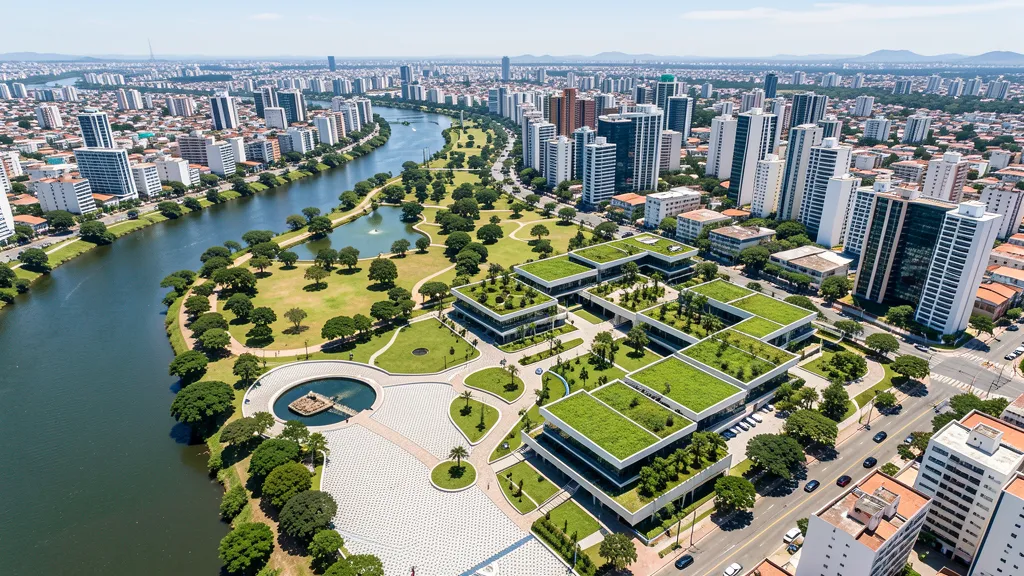
- Green roofs and vegetated facades for thermal control and energy efficiency
- Buildings with environmental certification and water reuse systems
- Retaining walls and barriers against landslides in risk areas
Regulatory challenges and legal security
Another central point of the interview was the urgent need to create a regulatory environment with greater legal certainty to enable long-term investments in resilient infrastructure. According to Sarti, without clear and stable rules, it is extremely difficult for companies and governments to plan and execute climate adaptation works that require decades of maturation.
CBIC has worked together with the federal government and regulatory bodies to build regulatory solutions that encourage the adoption of sustainable practices in civil construction. This includes the review of municipal building codes, the creation of tax incentives for green construction, the simplification of environmental licensing and the standardization of climate resilience requirements across the national territory.
The main challenges and solutions proposed by CBIC include:
- Lack of urban planning: review of master plans with a climate focus
- Obsolete infrastructure in cities: investment in resilient works and sustainable drainage
- Legal uncertainty to invest: stable regulatory framework for green construction
- Lack of technical training: courses and certifications in sustainable construction
How to prepare for the future of construction
Adapting cities to climate change is no longer a distant option, but an urgent and immediate need. Civil construction professionals need to be trained in resilient design techniques, use of software such as AutoCAD Civil 3D and Revit for infrastructure modeling, and mastery of updated ABNT technical standards.
Check it out on CanalVIP catalog essential tools and software for engineers and architects who want to work on resilient infrastructure and sustainable construction projects in Brazil. Invest in your professional training and prepare yourself for market challenges.