
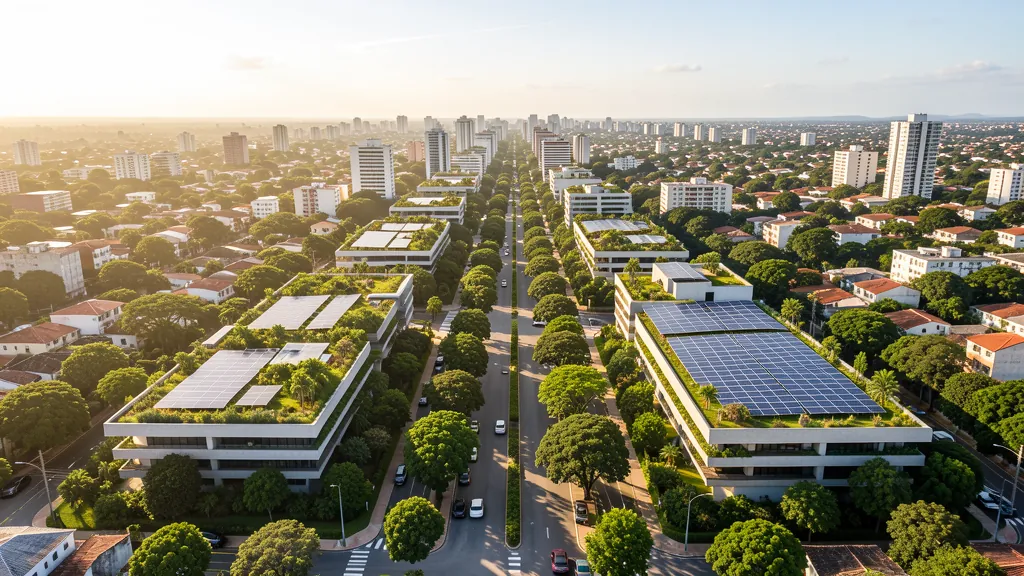
Brazilian construction is reinventing itself to face the impacts of climate change with technological innovation and strategic urban planning. The global average temperature has already risen 1.1°C and some regions of Brazil have registered warming of up to 3°C in the last six decades, according to data from the National Institute for Space Research (INPE). Extreme events such as heat waves, torrential rains and prolonged droughts have become more frequent, requiring engineers and architects to design buildings and infrastructure that are increasingly resilient and prepared for these climate challenges.
Available Technologies for Resilient Construction
According to Nilson Sarti, vice-president of Environment and Sustainability at the Brazilian Chamber of the Construction Industry (CBIC), the technology to make cities more prepared for extreme weather events already exists. The main challenge currently is to expand its large-scale adoption in Brazilian projects. Among the most promising solutions available on the market are:
- Modified asphalt and reflective pavements that reduce heat absorption and lower urban temperatures by up to 3°C
- High-performance concretes with greater durability, resistance to thermal cycles and lower water permeability
- Nature-based solutions such as linear parks, rain gardens, and green roofs that absorb rainwater and reduce flooding
- Sustainable urban drainage systems for efficient control of surface runoff in heavy rain events
- Construction materials with longer useful life and less maintenance required in adverse weather conditions
These innovations not only increase the resilience of buildings, but also generate significant savings in the long term, with less need for repairs and reconstruction after severe weather events.
Public Policies and the Role of CBIC
The adoption of these technologies on a national scale depends on concrete advances in public policies, technical standards and financing mechanisms. Nilson Sarti highlights that it is urgent to update ABNT's technical standards, review the criteria for contracting public works and expand access to specific credit lines for resilient infrastructure.
CBIC has been actively involved in this sectoral transformation. The entity participated in the construction of public policies aimed at sustainable finance, contributed to the implementation of the Brazilian Sustainable Taxonomy and promotes the debate on climate adaptation and decarbonization of civil construction. Through the agreement with ENBPar, CBIC also disseminates the Brazilian Building Labeling Program (PBE Edifica), an initiative that encourages energy efficiency and sustainability in Brazilian buildings. These actions create a more favorable environment for construction companies and developers to adopt innovative and sustainable construction practices.
Urban Planning for the Climate of the Future
Incorporating climate adaptation criteria from project design is fundamental to increasing the resilience of Brazilian cities. This includes more efficient drainage systems, expansion of permeable green areas, careful choice of materials suitable for severe climatic conditions and energy efficiency solutions integrated into the architectural design from the initial phases.
As Nilson Sarti highlights, "we need to plan cities for the climate of the coming decades, and not for the climate that is already behind us." This paradigm shift in civil construction reduces maintenance and reconstruction costs, preserves lives and significantly increases the quality of life of the urban population. Investing in more resilient cities today means reducing future risks and ensuring more sustainable and safe urban development for Brazil.
Essential Software for Resilient Projects
For engineers and architects who want to design buildings that are more adapted to climate change, access to specialized tools is essential. BIM software such as Autodesk Revit, AutoCAD Civil 3D and structural analysis solutions allow you to simulate climate scenarios, optimize energy consumption and develop projects with greater precision and sustainability. Check it out on CanalVIP catalog the options available for download and start incorporating innovation and resilience into your engineering projects.