
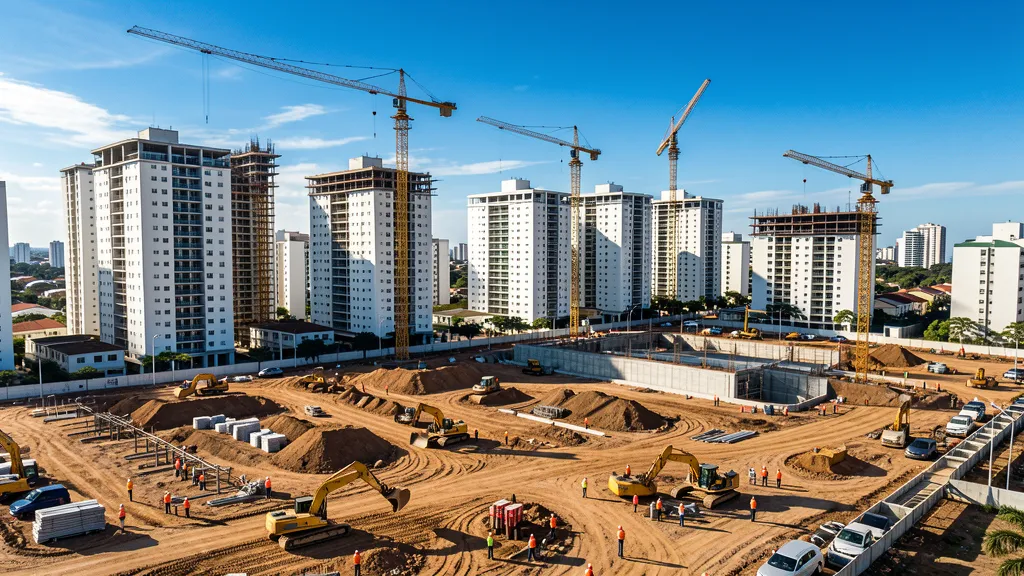
The Brazilian infrastructure sector presented significant employment generation data in 2026, consolidating civil construction as one of the main drivers of the national economy. According to official indicators from the Ministry of Labor and Employment, the segment generated 154 thousand accumulated vacancies, positioning itself as the second largest generator of formal jobs in the country.
Infrastructure and Job Generation in Civil Construction
The civil construction segment acts as an indicator of economic activity and labor absorption in the Brazilian market. Investments in basic engineering and real estate development have a direct impact on income distribution and the movement of formal employment contracts in different regions of the country.
Hiring balances are monitored by government tools such as Novo Caged, which indicates the continued participation of companies in the sector in opening jobs. The relevance of the segment is demonstrated by surveys that show civil construction as the second largest formal employer, behind only services.
- Civil construction generated 154 thousand accumulated vacancies in 2026
- Second largest sector in generating formal jobs in Brazil
- Investments in infrastructure drive the economy in all regions
- Sanitation and housing works boost hiring
- Construir Ai Fair in September will bring together managers and technicians from the sector
Sanitation and Housing: Social Impact of the Sector
Basic engineering works generate impacts that go beyond the job market. Studies developed by Instituto Trata Brasil reveal that advances in sewage collection and treated water distribution systems reduce the incidence of infections and the costs of hospital stays, demonstrating the social return on investments in infrastructure.
Another indicator monitored by government and private spheres is the housing deficit in the country. The demands for new housing and the planning of basic urban infrastructure are integrated into the real estate incorporation and sanitation goals of Brazilian municipal administrations.
Reducing housing gaps depends on factors such as the productivity of construction companies and the training of local service providers. The technical updating of contractors and subcontractors raises the standard of operational safety on construction sites and supports the economic formalization of the sector.
Construir Ai Fair and Perspectives for the Sector
To debate the prospects of national infrastructure and present industrial innovations, the sector will bring together managers and technicians at the Construir Ai Fair. The business meeting takes place from September 8th to 11th at Expocentro Balneario Camboriu, consolidating a space for the exhibition of high-performance materials and digital management tools.
The fair seeks to integrate the supply chain of construction companies and materials industries to reduce the gross cost of buildings. Monitoring indices such as the National Construction Cost Index (INCC) guides investment decisions in the long-term real estate market.
How to Track Opportunities
Professionals and companies in the engineering and architecture sector can follow market trends and check out the main tools and software used in civil construction in Brazil. CanalVIP catalog. Professional qualification and the use of appropriate technologies are competitive differentiators in a sector that continues to generate jobs and drive the Brazilian economy.