
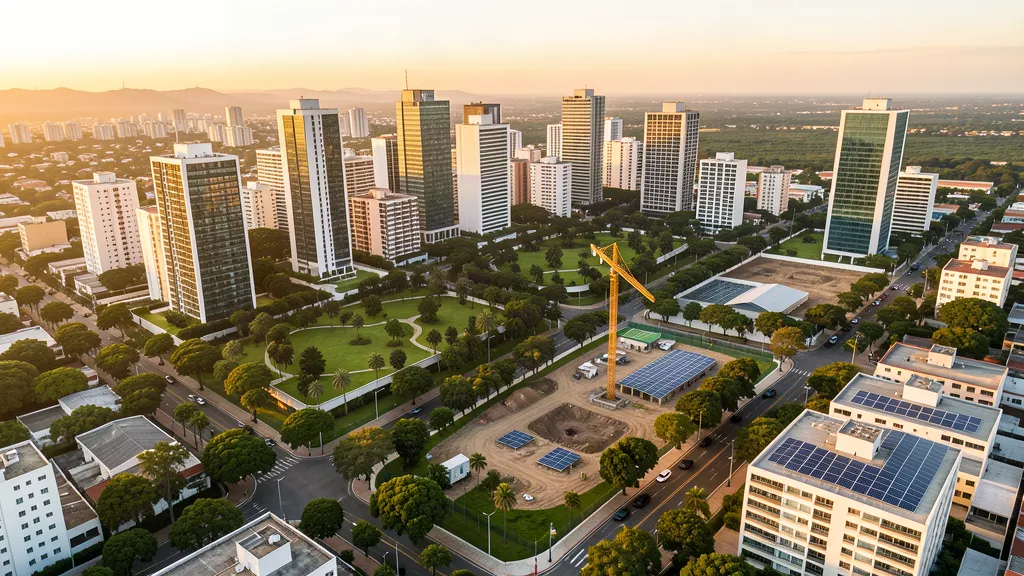
Sustainable construction is the central axis of the agenda that the Brazilian Chamber of the Construction Industry (CBIC) wants to scale to make Brazilian cities more prepared for climate change. The message was conveyed at the opening of Construindo Cidades Resilientes – Real Estate Development, Construction and Sustainable Finance Forum, held in São Paulo with the participation of sector entities, public policy makers and financial institutions.
What CBIC advocates for sustainable construction
The president of CBIC, Eduardo Aroeira Almeida, reaffirmed the entity's commitment to working in partnership with public authorities, sector entities and financial institutions to promote construction that is increasingly innovative, efficient, sustainable and prepared to contribute to the development of Brazil. For him, there is no contradiction between protecting the environment and increasing the sector's competitiveness.
"CBIC believes that sustainability and development go hand in hand. Innovation, efficiency and decarbonization represent opportunities to increase productivity, reduce costs throughout the life cycle of buildings, add value to projects and expand access to new markets and sources of financing", stated Aroeira.
- Reduction of emissions throughout the life cycle of buildings
- Use of materials with lower environmental impact
- Energy and water efficiency in buildings
- Integration of new technologies in construction processes
- Cities more prepared for climate challenges
Resilient cities and transition financing
According to Aroeira, the climate agenda is no longer just an environmental agenda to directly influence the competitiveness of companies, the ability to attract investments, the productivity of the economy and the quality of life of the population. "Talking about resilient cities is talking about infrastructure, housing, mobility, efficiency, innovation and development. It is in this context that civil construction assumes a strategic role", he added.
Brazil has favorable conditions to lead this transformation: a predominantly clean energy matrix, recognized technical capacity, an innovative business sector and a market with great potential for low-carbon solutions. The Forum discussed the challenges of access to credit, risk perception and the structuring of projects aligned with the requirements of the financial market.
The vice-president of Real Estate Industry at CBIC and executive president of Secovi-SP, Ely Wertheim, defended the removal of excessive bureaucracy and legal obstacles to accelerate the transition. He pointed out the spread of standards between the federal, state and municipal scopes as one of the bottlenecks in materializing the projects.
What does this change for engineers and architects
For professionals who work with design, construction and planning, the message is practical: environmental performance has become a criterion for competitiveness. Developers, construction companies and offices that master modeling and analysis tools are able to quantify impact, simulate efficiency and present metrics required by investors and financiers.
Software such as Revit, AutoCAD and BIM tools help to structure projects with less resource consumption and better energy performance — exactly what the resilient cities agenda demands. Those who master these technologies come out ahead in tenders, partnerships and green credit lines.
How to follow the agenda
CBIC conducts a high-level technical agenda to support companies in aligning with best practices and standards, with joint actions with ABRAINC, GBC Brasil, Saint-Gobain, Secovi-SP and SindusCon-SP. Tracking these initiatives helps you anticipate market trends and technical requirements coming to projects.
To stay up to date with the main design tools, check out the CanalVIP and find the software that the sustainable construction market demands.