
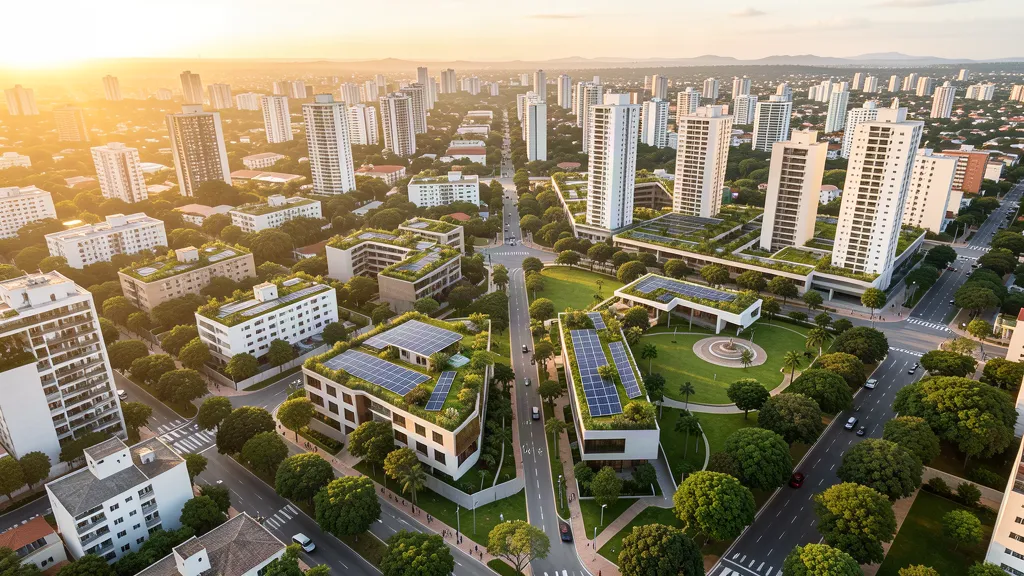
Sustainable urban planning is no longer a topic of debate but has become a concrete requirement in Brazilian cities. Adapting master plans, applying Climate Plan metrics and unlocking green financing were the axes of Construindo Cidades Resilientes, a forum held in São Paulo by CBIC with ABRAINC, GBC Brasil, Saint-Gobain, Secovi-SP and SindusCon-SP.
What changes in sustainable urban planning
The transition of cities to a more resilient model requires adapting current master plans and a new mentality in urban planning. "We have a lot of planning, goals, and now it's time to test", summarized Nilson Sarti, vice president of Sustainability at CBIC. According to him, master plans need to take metrics into consideration to mitigate the impacts of climate change.
- Master plans with climate resilience metrics and measurable indicators
- Review of urban codes and ordinances to reduce the vulnerability of buildings
- Specific goals to adapt public housing to new standards
- Alignment between the public and private sector to make the agenda effective
The national secretary for Climate Change, Aloisio Lopes Pereira de Melo, reinforced that the moment requires transforming the Climate Plan's goals, metrics and indicators into action. "The environmental impacts are evident, a reality in the world", he considered. For him, the Brazilian challenge is to identify the correct way to apply metrics in infrastructure and housing projects, making clear the potential for financial return to attract investment.
Energy efficiency and the new phase of the Sustainable Taxonomy
Energy efficiency also gained prominence in the debate. According to Laisa Brianti, energy transition leader at Mitsidi, the adoption of the Edifica Plan will begin in 2027, starting with the adaptation of the public sector. The conformity assessment will follow the PBE requirements, with self-declaration, and a platform will be structured to monitor implementation and speed up labeling without imposing bureaucracy.
The Brazilian Sustainable Taxonomy (TSB) advances to a second phase, which should add themes such as work and gender inequality. For Lília Sarrouf, technical coordinator of COMASP at SindusCon-SP and CBIC representative on the TSB advisory committee, the tool expands the supply of resources for sustainable enterprises — and the new stage will also reach small and medium-sized companies.
On the global stage, SB COP, an alliance created by CNI to include the productive sector in COP 30, already engages 40 million companies in 60 countries, according to Maria Emília Peres, from Orbis Instituto. She pointed out, however, a Brazilian bottleneck: "there is a lack of data from Brazil, it is difficult to position Brazilian sectors" on the international climate agenda.
Sustainable financing was another central axis: the debates sought solutions for access to credit, investors' risk perception and the structuring of bankable projects, aligned with the requirements of the financial market. Translating environmental performance into financial metrics is the way to expand green instruments and reduce the cost of capital for sustainable enterprises.
How cities and construction can prepare
The forum made it clear that the climate agenda is no longer an environmental agenda to influence competitiveness, attract investment and quality of life. Civil construction assumes a strategic role: reducing emissions, incorporating new technologies, using lower impact materials and increasing the energy and water efficiency of buildings.
Nilson Sarti signaled that the paradigms of the TSB and the Climate Plan will be incorporated into the project The Future of My City, a CBIC initiative led by the CMA to encourage society's participation in strategic planning. The theme also dialogues with the Sustainable Finance for Construction project, by CMA in partnership with Senai.
For engineers and architects, the message is practical: projects that are born with performance metrics, energy efficiency and adequate documentation will be ahead in access to credit and financing. BIM tools like Revit and Civil 3D help simulate performance and organize this information from conception.
Check it out on CanalVIP catalog CAD and BIM software solutions to design more efficient buildings prepared for the new sustainable financing criteria.