
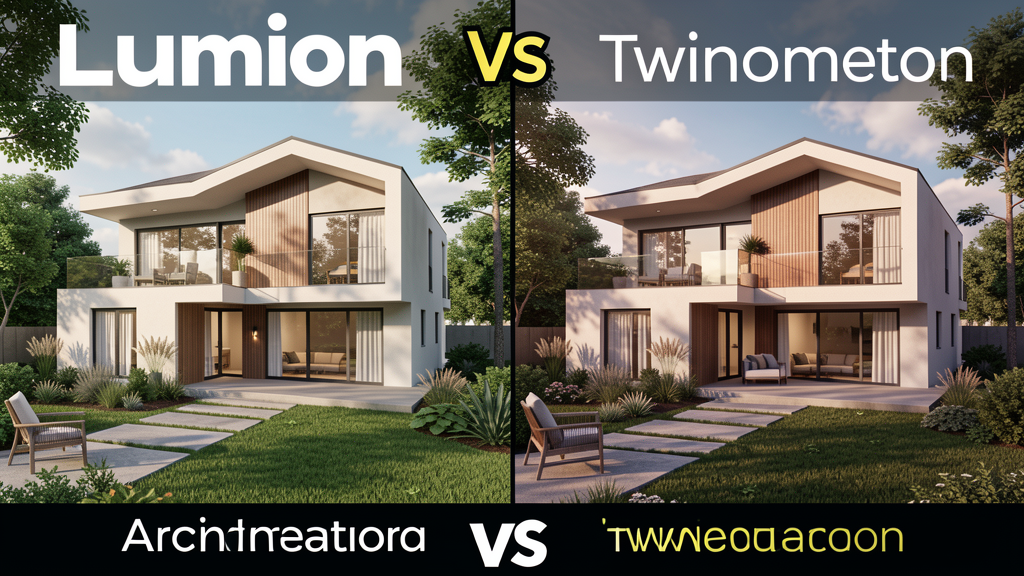
COMPARISON GUIDE
Two software programs dominate real-time architectural visualization: Lumion and Twinmotion. In 2026, both are more mature, cheaper to access, and integrated with Brazilian BIM workflows. This definitive comparison shows the practical differences in performance, visual quality, libraries, VR, and price, so you can decide which one to install.
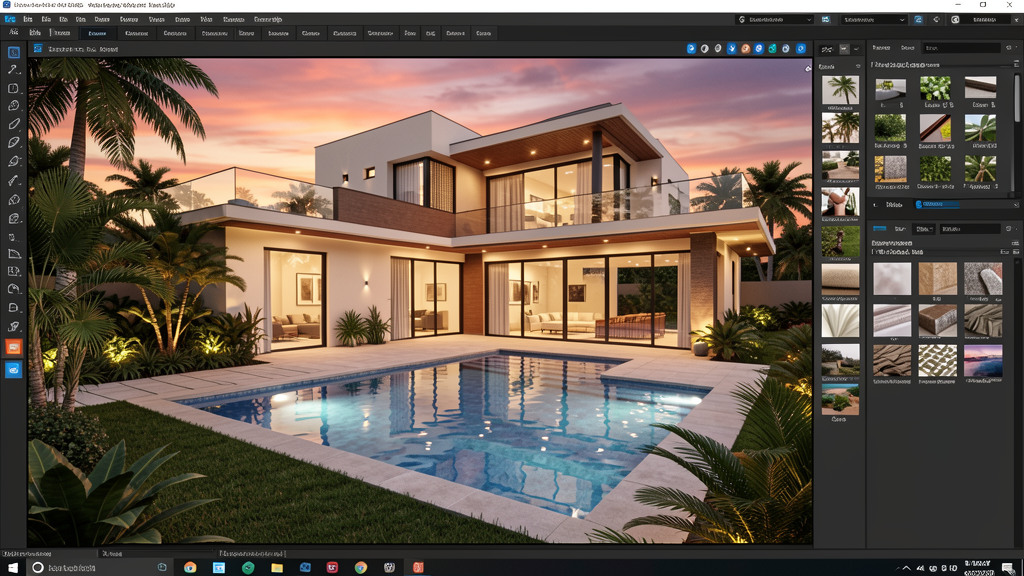
The real-time rendering landscape in 2026
Classic photorealistic rendering with 3ds Max, V-Ray, or Corona still exists, but it has lost ground to real-time rendering. Today, architects and engineers need to present projects to clients in meetings, make adjustments during the conversation, and even use VR. Lumion and Twinmotion answer exactly this demand - each with its own approach.
Lumion 2026: convenience and a huge library
Lumion, by Act-3D, has been the established reference for real-time visualization since 2010. The 2026 version (Lumion 2026) arrives with:
- A library with more than 12,000 items (materials, vegetation, people, vehicles, furniture)
- Real-time hybrid ray tracing on RTX cards
- Integrated OpenStreetMap to place the project in its real-world terrain
- Volumetric effects and volumetric lighting with low GPU cost
- Export to DaVinci Resolve and video generation up to 8K
Lumion's great strength has historically been its ease of use: within hours, an architect with no advanced rendering experience can produce images comparable to professional productions. Its library is the most complete on the market, with tropical plants that pair well with Brazilian landscaping.
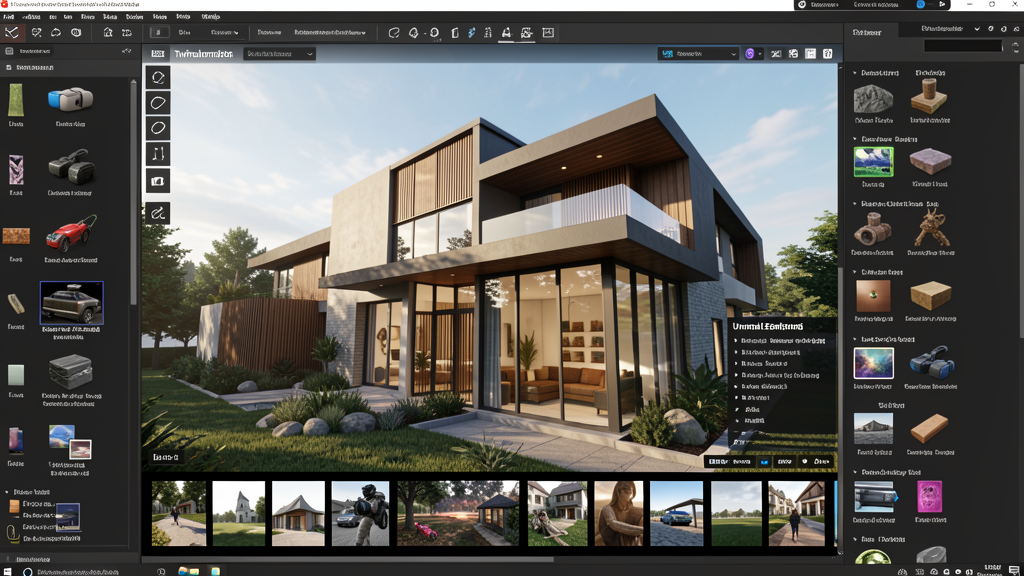
Twinmotion 2026: Unreal engine and cinematic fidelity
Twinmotion, by Epic Games (creator of Fortnite and Unreal Engine), has grown rapidly since 2020. The 2026 version delivers:
- Unreal Engine 5 engine with Lumen (real-time global illumination) and Nanite (virtualized geometry)
- Native photorealistic rendering even in complex scenes
- Integrated Quixel Megascans library (vegetation, rocks, terrains)
- High-quality native VR, with Meta Quest support via Air Link
- Simultaneous multi-user (several professionals in the same scene in real time)
- Free for educational use and a community version
Twinmotion stands out for its cinematic visual fidelity, benefiting from the Unreal engine. Lumen brings dynamic global illumination - move a window's position and the lighting adjusts on its own, with no pre-calculation.
Head-to-head comparison: Lumion vs Twinmotion 2026
Criterion Lumion 2026 Twinmotion 2026 Visual quality Excellent, with hybrid Ray Tracing Superior in complex scenes (Lumen + Nanite) Iteration speed Very fast in light to medium scenes Excellent on RTX 40-series GPUs Asset library 12,000+ items, best for furniture and people Quixel Megascans superior for vegetation and terrain Ease of use Shorter learning curve Simple interface, but more advanced options VR Basic support with PCVR Robust native VR, including Meta Quest Multi-user collaboration Not native Yes, in real time Price (2026, BR market) ~R$ 1,400/year Pro subscription Free (community version); Pro ~R$ 800/year Minimum GPU requirements RTX 3060 / RX 6700 XT recommended RTX 3070 recommended for LumenWhich to choose for your Brazilian firm?
Choose Lumion if:
- You prioritize ease of use and want fast results with no learning curve
- Your team is small and runs RTX 3060 cards or similar
- You need a library of people, furniture, and vehicles for realistic scene settings
- You do a lot of tropical landscaping and want ready-made elements (palm trees, vegetation, decks)
Choose Twinmotion if:
- You want maximum cinematic fidelity and use (or plan to use) Unreal Engine on other projects
- You invest in native VR for immersive client presentations
- Your team works with real-time multi-user collaboration
- You need Quixel Megascans (Epic's library) for realistic natural terrains
- You want zero upfront cost (community version) with an optional Pro upgrade
Use both if:
Many Brazilian firms keep Lumion for quick client presentations and Twinmotion for high-quality final renders and VR. The choice depends on the project and the time available.
FAQ - Frequently Asked Questions
Lumion or Twinmotion: which renders faster?
On equivalent hardware and light scenes, Lumion is usually faster for iteration. In complex scenes and on RTX 40-series cards, Twinmotion makes better use of Lumen and Unreal Engine's ray tracing, delivering frames with superior quality without an FPS drop.
Can I use Twinmotion for free as a professional?
Epic Games offers the free community version of Twinmotion for commercial use, with the only restriction being a subtle watermark displayed on images. To remove the watermark and unlock multi-user VR, the Pro subscription costs around R$ 800/year in Brazil in 2026.
Which is best for integrating with Revit, SketchUp, and Archicad?
Both support direct import of SKP, RVT, DWG, IFC, and FBX files. Twinmotion has the more robust official SketchUp plugin; Lumion has the older but functional Revit plugin. In 2026, both cover the main formats in the Brazilian market.
Do I need a dedicated graphics card?
Yes. For either software, a decent minimum experience requires a dedicated GPU with at least 6 GB of VRAM (RTX 3060 or RX 6700 XT). For Twinmotion with full Lumen and ray tracing, an RTX 4070 or higher is recommended.
Does Twinmotion replace Unreal Engine?
Not entirely. Twinmotion is a vertical product for architecture, with a simplified workflow. Unreal Engine 5 is the complete platform, also used in games, films, and simulations. For standard architectural projects, Twinmotion is more than enough. For custom visual effects or integration with games/gamification, the full Unreal is necessary.
Final thoughts
The choice between Lumion and Twinmotion in 2026 depends less on quality - both deliver photorealism - and more on workflow, hardware, and cost. For most Brazilian architects, Twinmotion has gained ground thanks to its zero entry price, native VR, and Unreal engine. But Lumion remains unbeatable in ease of use and its furniture/tropical vegetation library.
The best path, in many cases, is to install Twinmotion (free), test it on a real project, and only then assess whether it's worth migrating to Lumion Pro. Start free, scale as demand grows.
Want to download Lumion, Twinmotion, or other visualization software?
See the full software catalog →
Read also
- Engineering software catalog
- Complete Lumion rendering guide
- More technical guides on the CanalVIP blog
Lumion 2026 Twinmotion 2026 Real-Time Rendering Unreal Engine 5 Architectural Visualization Architecture VR
Disclosure: Some links on this page may be affiliate links. If you buy through them, CanalVIP may receive a commission at no extra cost to you. We only recommend tools relevant to the topic.