Overview
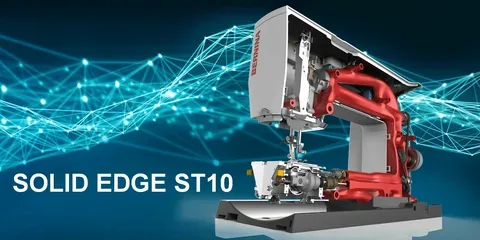
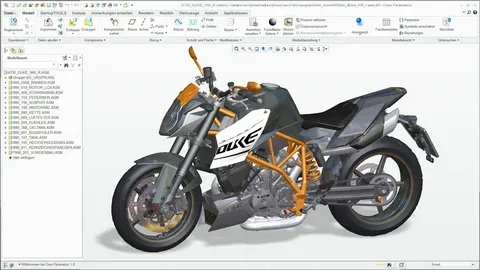
Siemens Solid Edge 2025 is a professional 3D CAD platform developed by Siemens Digital Industries Software that combines the power of parametric feature-based modeling with the speed and flexibility of Synchronous Technology. It provides comprehensive tools for part design, assembly management, sheet metal, weldments, piping, and electrical routing — all integrated with Teamcenter PLM for enterprise data management.
Solid Edge 2025 introduces significant performance enhancements including up to 50% faster opening speeds for large assemblies managed by Teamcenter, enhanced Quick Patterning workflows, new Style Picker tool for face style management, and improved Pathfinder organization with active filtering and Pack All command for large assemblies.
| Capability | Description |
|---|---|
| Synchronous Technology | Hybrid parametric/direct modeling — edit imported geometry without rebuilding history |
| Assembly Design | Large assembly management with lightweight representations and multi-CAD support |
| Simulation | Integrated FEA (linear static, modal, buckling, thermal) |
| Generative Design | Topology optimization for lightweight, manufacturable designs |
| Data Management | Teamcenter PLM integration and cloud-based data sharing |
Synchronous Technology
Synchronous Technology is the standout innovation in Solid Edge, combining the speed and flexibility of direct modeling with the precise control of parametric feature-based design. It allows users to edit imported geometry from any source as if it were native, without understanding the original construction history. This dramatically reduces the time required to modify designs from suppliers, legacy data, or different CAD systems.
Assembly Design and Management
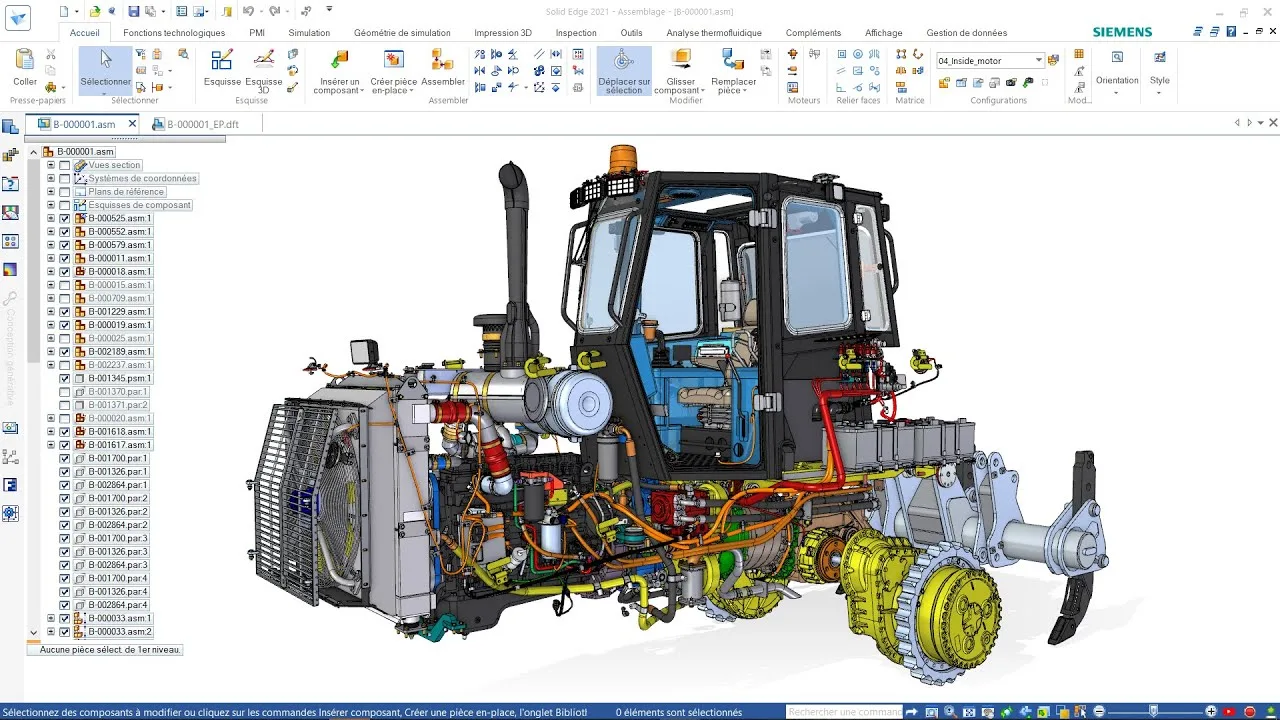
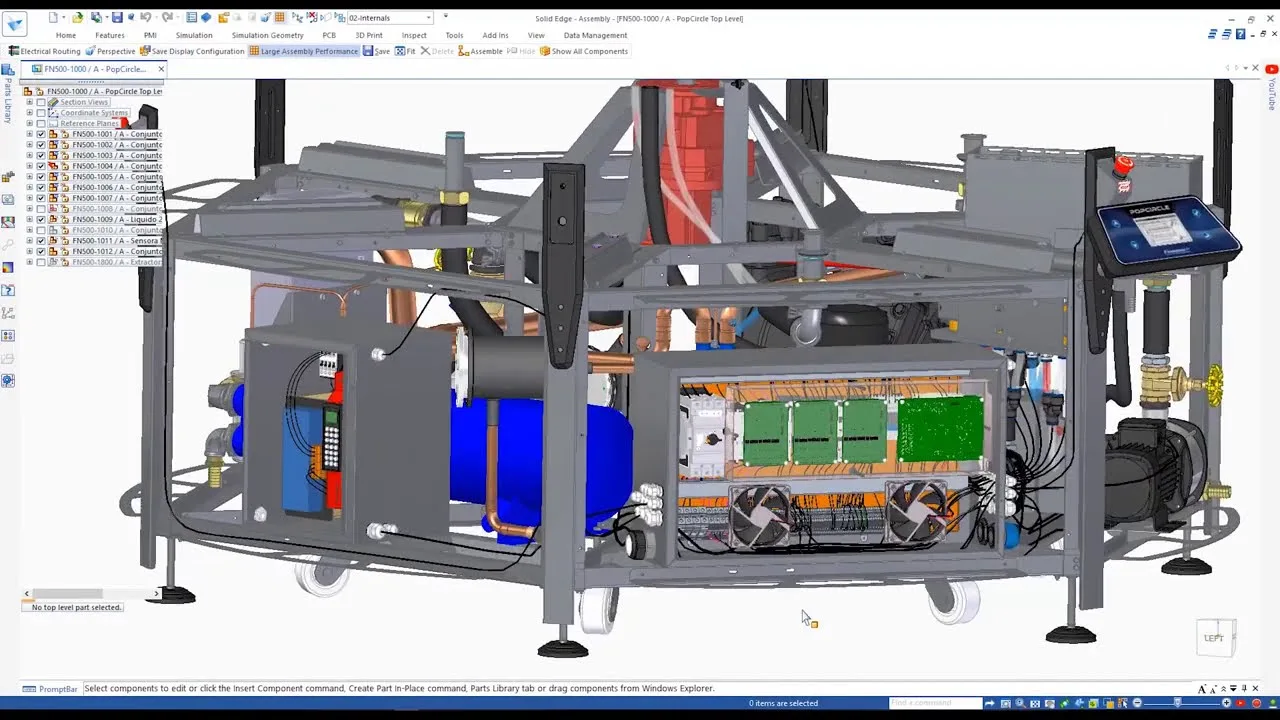
Solid Edge provides powerful tools for managing complex assemblies with thousands of components. Lightweight representations, simplified part replacements, interference checking, and exploded view generation make large assembly management efficient. Multi-CAD data handling allows seamless incorporation of models from other CAD systems.
Integrated Simulation
Built-in FEA capabilities provide linear static, modal, buckling, and thermal analysis directly within the design environment. Engineers can validate designs early without exporting to separate simulation tools, reducing iteration cycles and physical prototyping.
Generative Design and Topology Optimization
The generative design capabilities allow engineers to define load cases, constraints, and manufacturing methods, then let the software generate optimized geometry that meets all requirements while minimizing material usage.